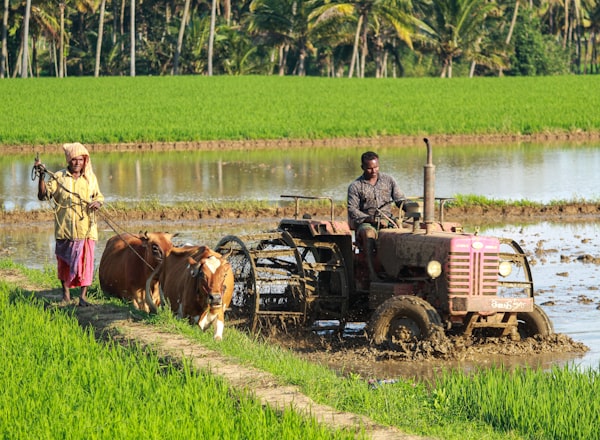
Machine Learning in Agriculture: Smart Farming for Thailand
Agriculture remains a cornerstone of Thailand's economy, employing over 30% of the workforce and contributing significantly to exports. Machine learning is transforming traditional farming practices, helping farmers increase yields, reduce costs, and adapt to climate change. From satellite imagery analysis to soil sensor networks, smart farming is becoming reality in Thai fields.
Crop prediction models analyze weather patterns, soil conditions, and historical yield data to forecast harvests with increasing accuracy. These predictions help farmers make better planting decisions, enable traders to plan inventory, and allow banks to assess agricultural loan risks. Government agencies use aggregated predictions for food security planning and export forecasting.
Pest and disease detection has been revolutionized by computer vision. Farmers can photograph a plant with their smartphone, and AI models identify diseases, nutrient deficiencies, and pest damage within seconds — along with recommended treatments. These systems learn from millions of images contributed by the global farming community, becoming more accurate with each diagnosis.
Precision irrigation systems use IoT sensors and machine learning to optimize water usage. Soil moisture sensors, weather forecasts, and crop growth models determine exactly when and how much to water each zone of a field. Thai farms implementing precision irrigation report water savings of 30-50% while maintaining or improving crop yields — critical as water resources become increasingly stressed.